
Web Design
A website that just "looks nice" isn't enough anymore. Yours needs to work — load fast, rank well, and actually turn visitors into customers.
Here's the thing most agencies won't tell you: a pretty website that nobody finds on Google is a waste of money. We've been building websites from our Milan office since 2015, and the ones that work share three things — they're fast, they're clear about what the business does, and they make it dead simple to take the next step. Whether that means filling out a form, making a purchase, or picking up the phone. We build with React, Next.js, and Tailwind because those tools let us ship without cutting corners on performance. But honestly, the tech stack is the least interesting part. What matters is the thinking behind every page.
Built Around Real Users
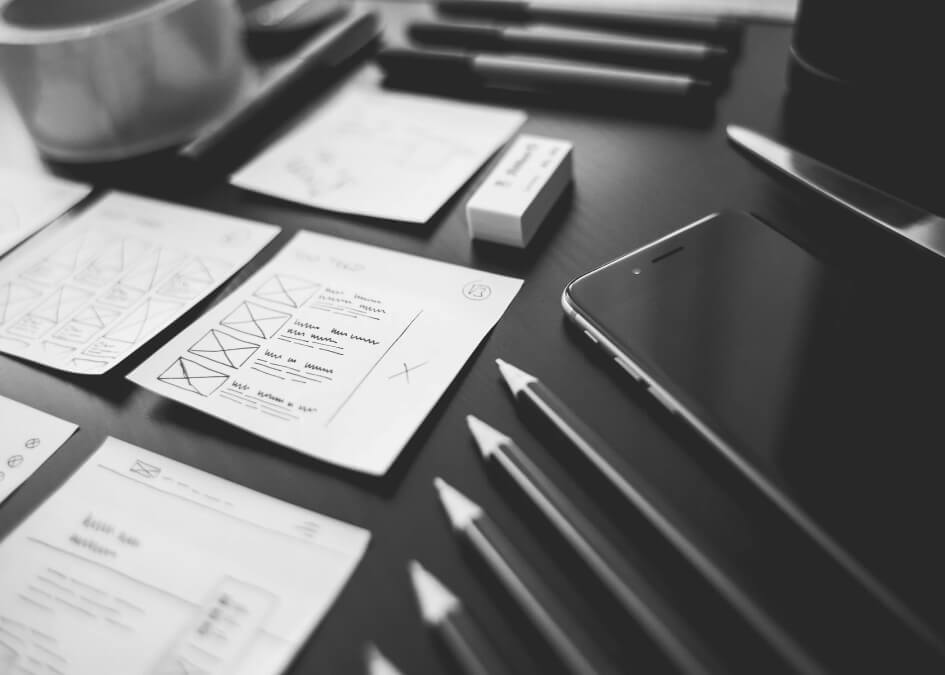
Before opening Figma, we spend time understanding who's actually going to use this site. We look at your existing analytics, talk to your sales team about common questions, and study what competitors are doing — mostly so we can do it better. Wireframes come from research, not guesswork.
Designed to Convert
A homepage isn't a brochure. Every section has a job: build trust, explain the offer, handle objections, push toward action. We set conversion goals before the first design review and track them post-launch. If something isn't working, we change it. No ego about it.
Fast on Every Device
Over 60% of your traffic is probably mobile. Our builds are mobile-first, tested on actual devices (not just Chrome DevTools), and optimized for Core Web Vitals. Lazy loading, image compression, code splitting — the boring stuff that separates a 1-second load from a 5-second one.
Search Engines Find It
SEO isn't something you bolt on at the end. URL structure, heading hierarchy, meta tags, structured data, internal linking — all planned during design. We've seen too many beautiful sites stuck on page 3 of Google because nobody thought about this early enough.
Words and Visuals That Work Together
Best design in the world falls flat with bad copy. And the best copy gets ignored on a cluttered page. We develop both simultaneously — message and layout evolve together. The result feels cohesive, not like a designer and a writer worked in separate rooms.
How We Work
Understanding the Problem
We sit down (video call or espresso in Milan) and dig into what your business actually needs. Not what a website should look like — but what it needs to accomplish. This gives us a brief, a sitemap, and a clear definition of success.
Designing the Experience
High-fidelity Figma mockups, shared at every stage. You can click through the prototype on your phone before we write a single line of code. Changes here cost nothing. Changes after development cost a lot.
Building It Right
React, TypeScript, Tailwind CSS. Proper components, real cross-browser testing. No page builders, no WordPress themes. Every site is hand-coded — it does exactly what we designed, nothing more, nothing less.
Launch and After
Full pre-launch checklist: performance, SEO, accessibility, forms, analytics. Then we stick around. Monthly reports, quick fixes, content updates — whatever keeps the site improving.
What You Get
Custom-built site, not a template with your logo slapped on
Mobile-first development tested on real phones and tablets
Page load under 2 seconds — slow sites lose customers
SEO wired into the structure from day one
Analytics, heatmaps, and conversion tracking set up at launch
Post-launch support: bug fixes, content updates, performance tuning
GDPR-compliant cookie handling and privacy implementation
Integrations with your CRM, email tools, or whatever you already use
Your website is the first thing most people see of your business. You don't get a second shot at that first impression. We've shipped over 300 sites in the last decade — not all were perfect on day one, but every single one got better because we stuck around to measure, learn, and improve.
Got a project in mind?
Drop us a line. First chat is on the house — no commitments, no sales pitch.